Aztec, Mexica or Conchero Dance
An overview of today's Aztec legacy
INVESTIGATIONS
Julián Katari
3/18/202624 min read
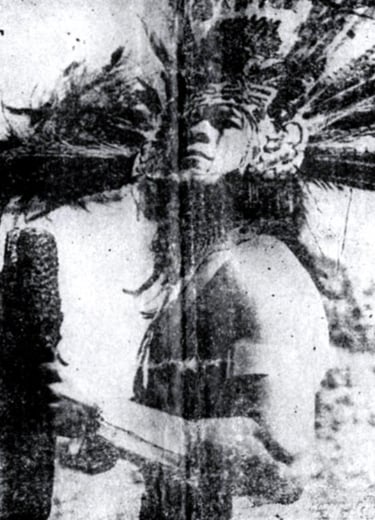
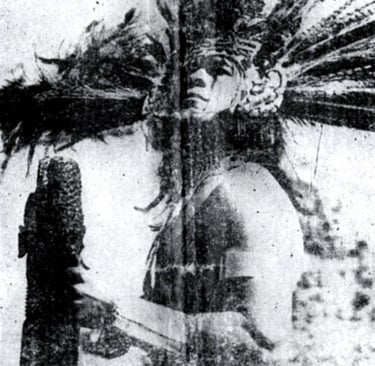
BACKGROUND OF THE MEXICA DANCE
Also called Aztec-Chichimeca Dance, Dance of the Conquest of the Great Tenochtitlan, Dance of Concheros, or Mexica Dance, it is the heritage and philosophical, cultural, spiritual, and artistic legacy of the Aztec people that, through a process of syncretism, managed to survive the conquest and remain until the present day. Since the times of Cuauhtémoc, the knowledge of this complex and profound cultural legacy was transmitted through bloodline captaincy clans that perpetuate the ritual of "flower, song, and dance" of the immortal Toltec-Tenochca culture.
It is known that the Aztec people, heirs of the ancestral Toltec culture, upon creating the Cemanahuac, compiled the different spiritual and cultural legacies of the peoples and nations they integrated into their empire. The Dance reflects this integration, as in this ritual more than 30 different dances are practiced to different deities, essences, elements, and animals, which demonstrates the immense richness that emerged from this cultural compilation.
There are not many written sources upon which to base a deep investigation into the Dance. On the contrary, there is an abundant amount of information that is transmitted orally within the Dance groups and within the movements referred to as "la mexicanidad" (Mexicanness). In this case, the word Mexica or Mexicanidad refers to the Mexica culture, which was composed of different tribes, clans, and population centers around the Valley of Mexico and spoke Nahuatl. There were many other Nahua peoples who were not Mexicas. Since they were the most central, it is perhaps a reason for it being the name given to the current country of Mexico, a territory that encompasses and integrates many other cultures besides the Mexica.
Today, there are three trends and variants in what we can generally call Aztec Dance: The Mexica Dance, The Dance of Concheros, and The Dance of Conquest.
The Mexica Dance is that which rejects and extracts any symbol of syncretism with the conquering religion. Contradictions with these dancers arise when, by extracting what is apparently a Christian symbol or practice, they are actually extracting a symbol or practice inherent to the Mexica culture. A debate exists; some affirm that the Mexica Dancers emerged from the Concheros and Conquest Dances—which are those that underwent cultural syncretism—and that they seek to purify the practice of the ritual by extracting any Christian symbol. Many of them consider themselves "cultural" groups, thus distancing themselves from a "spiritual practice and devotion." Many of these groups are formed freely, without being attached to a lineage, a descent, or having the "blessing and permission" of the spiritual and cultural authorities who have inherited and perpetuated the forms of the ritual since the times of the Aztecs. Others affirm that the Mexicas—some groups, not all—have always existed, that they distanced themselves and hid to be able to perpetuate the ritual without suffering syncretic impositions.
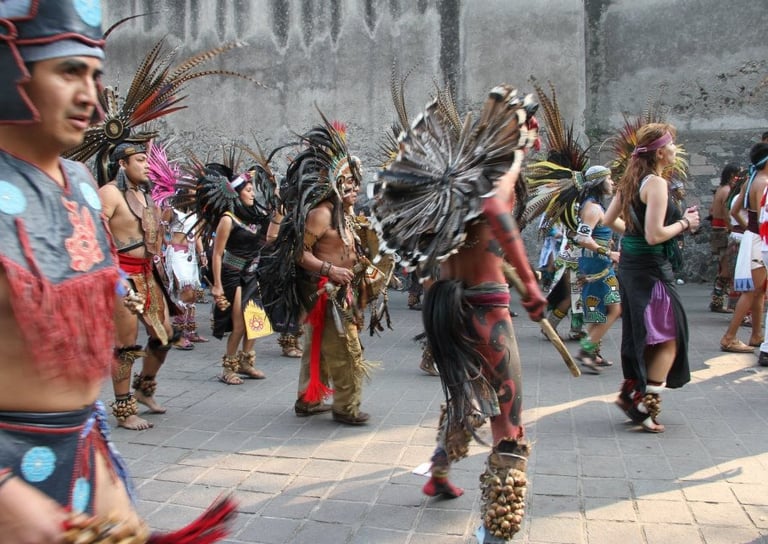
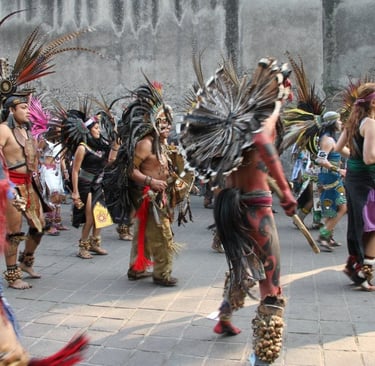
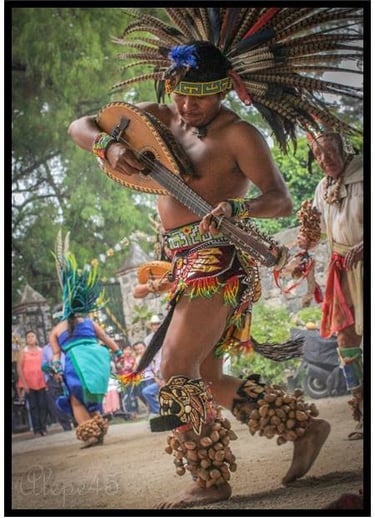
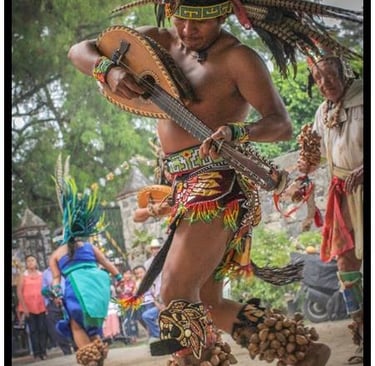
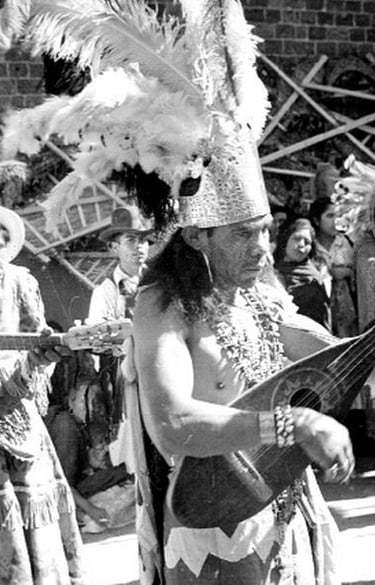
The Dance of Concheros was that which survived the ethnocide of the conquest through a syncretism with the Franciscan Catholic religion. Their dance outfits as well as their instruments have been modified by it. They use long skirts and dance with wooden sandals. They have eliminated the drum and only dance with chordophones built with armadillo shells called "conchas." From there comes the name "concheros." They have lost the ancient structuring of hierarchies. Everyone calls each other "compadres" and they consider themselves equals. The members of these groups affirm that only 9 dances exist, and that all the others that other groups practice have been recently invented.
The Dance of Conquest is a little-known variant. Here too a debate exists; some say this dance survived thanks to a syncretism with Jesuit groups. Others say no, that it is a symbiosis of the Dance of Concheros with some endemic groups of authentic Mexicas. These groups are the ones that contain the most abundant and complex practice of the ritual of the Dance. They are hierarchical groups that combine syncretized instruments and elements, such as armadillo shells, with those instruments and elements that are purely indigenous, rejected by the Concheros groups, such as animal skin outfits, the drum or huehuetl, and many symbolic elements of pre-Columbian rituals. It is necessary to clarify a confusion that may arise. These "Of Conquest" groups are also called "Concheros," although their ritual practices are much more complex and complete than the Concheros groups of the branch mentioned previously.
Many of the dances of these groups are practiced inside or near churches and cathedrals. In the same way, many of the songs seem to invoke the Christian god, the saints, the virgins, and Jesus. Although it could seem like a very Catholic practice, the majority of the dancers who participate in these groups are not Catholic. What happens is that these groups recognize that the energetic and spiritual centers of their ancestors are those that lie beneath the current Catholic temples. They are the same stones that have been reused to build a new temple. It is the same essence that has changed form. In the same way, the ancient deities that were repressed and destroyed by the Catholic imposition managed to remain in the songs and rituals of the indigenous people thanks to the fact that they disguised themselves as saints and virgins. The ancient god of rain, for example, Tlaloc, is now Saint John. In this way, they managed to keep the ritual alive, disguised as Catholicism.
Current groups of Dancers of Conquest recognize this, and with the passage of time, they are succeeding in strengthening the ancient symbols more and more and removing more and more of the masks and disguises that were necessary for the ritual to remain. They achieve this by making respected one of the laws and oaths made upon being received as dancers, which is: do not modify the ritual.
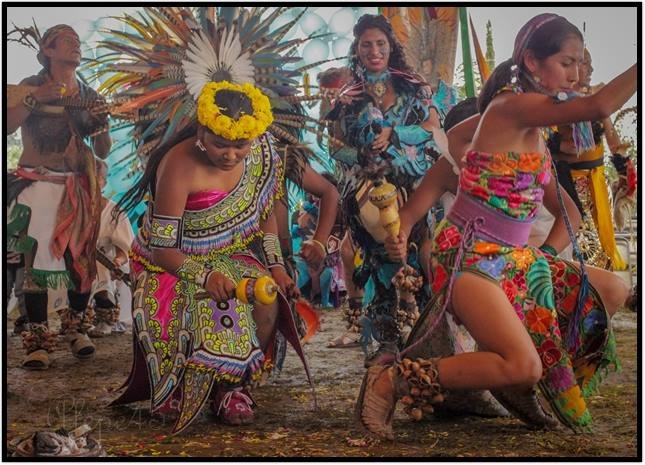
THE RITUAL OF FLOWER, SONG, AND DANCE OF THE DANCE OF CONQUEST
The Conquest
The term "Dance of Conquest" has several reasons and meanings. One of them is the way and the motive for which the rituals are organized. The Captain chooses to "conquer" a divinity, a deity—saint or virgin—regent of some population. The population must be equally interested in the dancers coming to their town to dance for their saint during the date on which the patron saint is celebrated. In this way, a contract is made—spiritual and legal—in which the group will go to dance for that saint on its date once every year for five years. In the contract, Mayordomos are chosen for each year, who are responsible for offering lodging and food to the dancers. Even a payment is made to the Captain. The Captain lives exclusively from the dance, for he needs to dedicate all his time to it. He will charge the Mayordomos for bringing the Dance group, and from that he lives. The dancers have the right to ask the Captain to help them pay their fare to the place if they do not have sufficient resources to do so.
The Conquest also refers to the spiritual conquest of the four elements and the four directions of the universe. In the Dance of Conquest, different rituals of social importance are sometimes practiced, in addition to the conquests of local patrons and the main "Winds" dances that we will describe below. These rituals include the marriage of couples in the pre-Hispanic fashion "atado de tilmas" (tying of capes), baptisms "presentación a los cuatro rumbos" (presentation to the four directions) where a Nahuatl name is given to the child; and the vigils of "levantado de sombras" (lifting of shadows) which is when a dancer passes away. In this last one, the dancer becomes a "Conquering Soul of the Four Winds" and a vigil is held on the same date, every year for four years, called "cabo de año" of the soul of the [name of the deceased]. These "Conquering Souls" are invoked by the dancers in the rituals and are vital energies that favor and watch over the living dancers from the world of the dead.
The Four Directions of the Universe
The Mexica worldview, first of all, is dual—represented by the god Ometeotl—and subsequently it is of four. There are four elements always present, as well as the four cardinal points, each governed by an essence or divinity. This worldview is reflected in many parts of the rituals, as well as in the fact that there are four main dances, dedicated to the four cardinal points. These dances are called "The Four Winds." They are dances that do not have Mayordomos, and which are attended every year. The Dance of the East is carried out in Amecameca, located east of the center of Mexico City, and is dedicated to the Lord of the Sacromonte, which is the representative divinity of the volcanoes—Popocatépetl and Iztaccíhuatl—that are found to the east. Toward the west is the sanctuary of Chalma, and the Dance is dedicated to the Lord of Chalma—a black Christ—who replaced the ancient divinity of Tlazolteotl, considered the direction and divinity of women. On December 12th, the Dance to Mother Earth is carried out, to the Virgin of Guadalupe, which is the wind of the north and is located in the sanctuary of the virgin called Tepeyac. The wind of the south, although it is the only one not perfectly oriented toward the south, is the Dance to the Virgin of Remedios. Finally, there exists a wind of the center, where only a vigil is practiced, in the ancient Aztec ceremonial center of Tlatelolco. Apart from these 5 main Dances, there is the general rehearsal of the group, the vigil of souls—All Saints—on November 1st, and the Dance dedicated to the Holy Child of Atocha, which is carried out in the oratory—general headquarters—of the group.
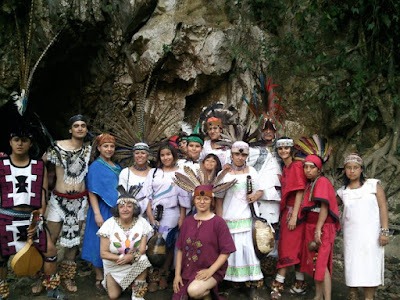
Throughout the year there are many more Dances in different places in the central zone of the country. The majority are conquests, where Mayordomos exist. Others have sought to revive the ancient rites to the solstices and equinoxes and are practiced upon ceremonial sites—archaeological zones—that do not have churches on top of them. In the group of General Ernesto Ortiz, there are some Dances in the State of Veracruz, somewhat far from the traditional zone of the Dances, and one in particular is practiced in a cave in conjunction with a rite of the Nahua indigenous people of the Sierra de Zongolica.
The Groupings and Their Hierarchies
The current groups of Dance of Conquest are formed in what are called "Mesas" (Tables) or in Nahuatl, Calpuli. They are groups that possess a hierarchical structure that grants them order and form. The Mesas always have a "General Headquarters" which is a place destined to be the official oratory of the Mesa where the "General Rehearsal" is performed every year.
First, there are the Generals, who are those wise grandfathers who created the Mesas. In the case of the author, they belong to the Mesa of the Holy Child of Atocha and Virgin of San Juan de los Lagos which was created by General Ernesto Ortiz Ramírez. A direct descendant of the ancient Aztecs, in the sixties he decided to make a series of spiritual pilgrimages that allowed him to obtain the "permission" of these saints and virgins—or local patrons—to create the current Dance group and which give it its name. General Ernesto managed to obtain—granted by the other generals—the title of "Quetzalcóatl Priest," an indigenous spiritual role that had been lost. This role allowed him to possess great wisdom, wisdom that he put into practice through the abstinence from harmful substances such as alcohol and tobacco. The spiritual legacy of General Ernesto left a deep mark on the current dancers who distinguish themselves from other groups by conducting a more harmonious, pleasant, and inclusive ritual, unlike other groups that are more closed, strict, and reflect a spiritual fervor more of a nature of the invasive religion than of the original spirituality.
n the second rank are the Captains. The Captains are named by the Generals and are the main leaders of the group. They are in charge of administering the resources of the groupings, leading the rituals, and carrying the maximum representation of the grouping, both legal and spiritual. The Captain of the Mesa of the Holy Child of Atocha and Virgin of San Juan de los Lagos was, until 2009, Ricardo López Ortiz, cousin of General Ernesto Ortiz Ramírez. To receive the captaincy they must have Aztec blood descent and must know absolutely all the dances, praises, and know all the procedures that are carried out in the rituals. Ricardo was offered the Quetzalcóatl priesthood, which he wisely declined as he was not willing to abandon his vices as his uncle did. In 2009 Ricardo died in a car accident due to alcohol intoxication and he bequeathed the captaincy to his sister Mercedes, who since then leads the group masterfully and is the only woman Captain that exists within the tradition groups.
In a somewhat independent rank, perhaps of greater importance than the captaincy, is the Malinche of Sahumadoras, chief of sahumadoras, or in short, The Malinche. In the rituals the four elements are always present; the fire element is present with sahumadores (incense burners) which with burning charcoal produce smoke with copal resin or incense. This smoke is used to cleanse people, change their energy to be able to enter the ritual, and to send prayers to heaven. Although there are exceptions, the sahumadores are for the exclusive use of women. The women who decide to carry a sahumador have to fulfill the responsibility that it implies. The Malinche is the patroness of all the sahumadoras, she who can grant or take away the permission to carry a sahumador. At the same time, she is considered the wisest woman of the group and also fulfills a role as a healer, watching over the physical and spiritual integrity of the group and all its participants.
After the Captaincy, there exist The First Word and The Second Word, also called First Conchero and Second Conchera. At the beginning and at the end of the rituals, there is always a "circle of the word," where everyone is allowed to express their concerns, and these individuals are the ones who—as their name indicates—have the first and the second word. They are the dancers with the most experience, along with the Malinche, often possessing more experience than the Captain or Captainess themselves. For this reason, they have the word to guide and organize the ritual, as well as to recite prayers, establish the ranks and roles that other dancers will hold during the ritual, and much more. Furthermore, when it is time to form up to march toward the site where the ritual will take place, they are the ones who position themselves at the head of the two rows or columns that are formed: one left and one right, one masculine and one feminine.
Another important rank is the Alférez (Standard-Bearer). The Alférez is in charge of carrying the Banner, or in Nahuatl, Pantli, which is a flag representing the group. This dancer has the responsibility of being present at all dances organized by the group, along with the other dancers who hold permanent positions. Simultaneously, they have the responsibility of dancing while carrying the banner. In the event they cannot attend due to a force majeure, they must hand the banner over to an experienced dancer who will substitute for them on that occasion.
All the aforementioned ranks are permanent. Those mentioned below are positions granted to different participants each time a ritual is performed.
The Third Word, or Regidor (Governor), is appointed at the start of each ritual. This member will have the responsibility of choosing which dancer will offer their praise during the ritual of "Flower and Song"—which we will explain later—and their dance during the ritual of the Dance.
In turn, at the start of a ritual, the Sergeants are appointed by agreement between the First Word, the Second Word, and the Malinche. Up to four may be appointed depending on the size of the gathered group of dancers. The Sergeants are in charge of overseeing order and harmony during the ritual. They will call the attention of anyone speaking during prayers, or anyone who breaks the harmony of the Dance circle.
Another position of lesser importance is the Caracoles (Shells). These are dancers who, as an instrument or "weapon," have decided to bring a sea shell used as a trumpet. The Caracoles have the responsibility of sounding their instruments to gather the group when it has dispersed. Additionally, every time the four directions are saluted, they must sound their shells.
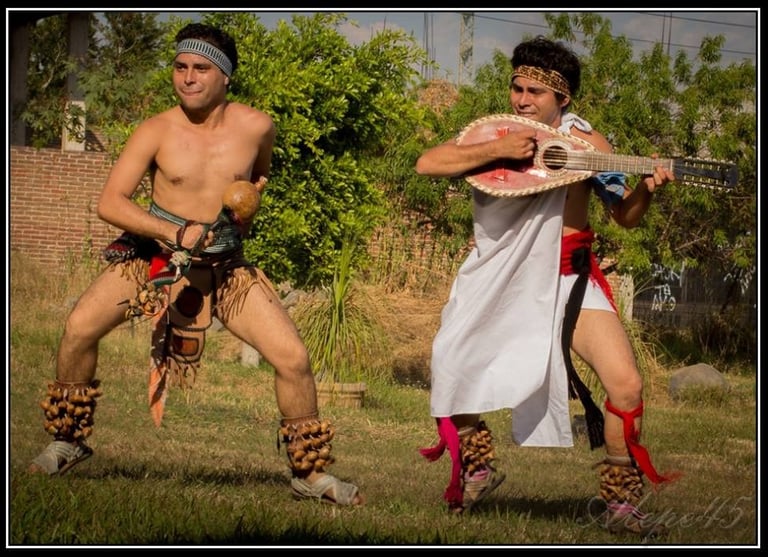
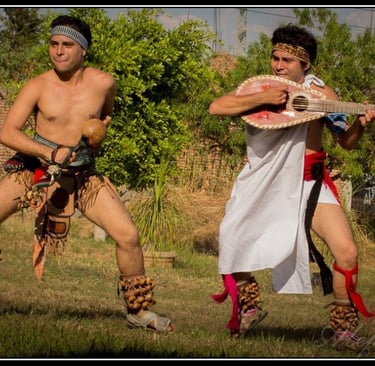
Next are the Cuentas. The cuentas are dancers who dance with a concha (the stringed instrument mentioned previously). Carrying this instrument grants them a higher hierarchy, which allows them greater eligibility to be chosen to offer their praise and their dance, as determined by the Regidor. When many dancers gather for a ritual, there is not enough time for everyone to offer their dance; therefore, certain guidelines are followed—with which the Regidor must be familiar—to choose those who hold higher hierarchy.
Finally, there are the Soldados Rasos (Rank-and-file Soldiers), or in Nahuatl, ayacaxtin. These are dancers who have not been dancing for long and, for that reason, dance using a rattle or ayacaxtli. Some dancers choose to sacrifice having a higher rank and eligibility in order to remain with the ayacaxtli, which allows for greater freedom of movement and expressiveness in the dances compared to the large and cumbersome conchas.
Description of the Rituals
Duality is part of the ancestral worldview and is reflected in various ways in the rituals of the Dance of Conquest. The first way we see this duality is in the two main rituals performed: the ritual of Flower and Song, or xochicuicatiliztli in Nahuatl, which is nocturnal and feminine; and the ritual of the Dance, or mitotiliztli in Nahuatl, which is diurnal and masculine.
Ritual of Flower and Song
The rituals have had to adapt to the reality of urban people, who normally only have weekends to dedicate their time to this art. Therefore, they are organized on the weekends closest to the date of the feast for the "divinity"—saint or virgin—to whom they will dance. Normally on Saturday night, the dancers gather in an oratory—a place destined for prayers where there is an altar—and perform the ritual of Flower and Song, commonly known as a "velación" (vigil).
The dancers bring candles and flowers as offerings. The Caracoles announce the start of the ritual around 8:00 PM. The First Word designates those who will go to the altar to create the "Tendido de la flor" (flower layout), a drawing or design with a specific symbol—a type of "mandala"—related to the patron being honored. The Regidor is chosen, and they choose who will offer (sing) the first praise. The chosen person may offer their praise alone or ask other attendees to accompany them; normally, this happens if the chosen person comes with others from a distant town, so they choose to offer their praise together.
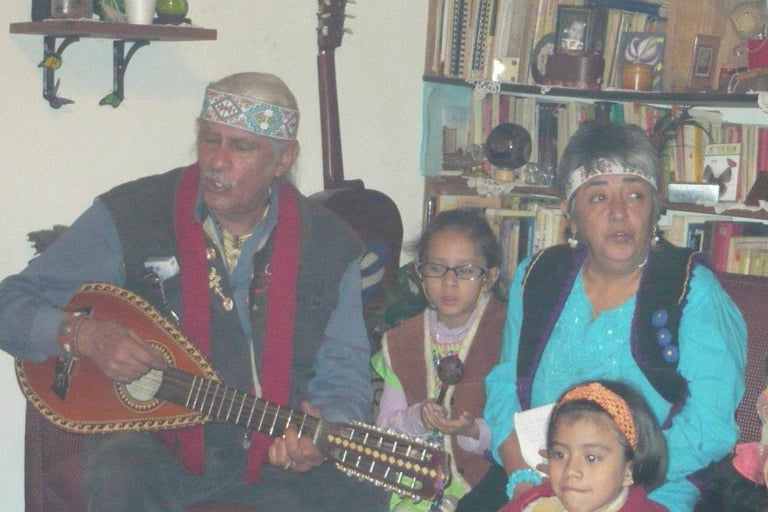
The praises are mostly in Spanish, though today a few have been rescued in Nahuatl that contain deep esoteric meanings and encompass much of the philosophical background accompanying the dancer. All of this is disguised as a "praise" that, to the ears of a Catholic priest, are nothing more than prayers dedicated to Jesus and the patron saints associated with the church. The praises are commonly accompanied by twelve-string conchas, mandolins, flutes, rattles, and drums. No instrument is discriminated against.
Singing Praises in the Vigil
The praises have two parts. The first is a repeating verse sung by everyone present at the vigil; the other is a changing verse intoned only by the person to whom the praise was granted. It is considered that the songs produce specific vibrations which, when intoned in unison, raise the vibration of the place, and these vibrations are imprinted onto the flowers. Those who have gone to the altar to create the figure with flowers "smudge" (cleanse with smoke) each flower and place it in the figure, thus charging the flower with the energies of the copal and the songs of all present. Once the flower figure is finished, the midpoint of the vigil is reached. The participants of the layout share their "word," expressing their feelings about what they experienced during the first part of the ritual. Subsequently, they move to dinner. The Mayordomos of the dance offer generally traditional food to the participants.
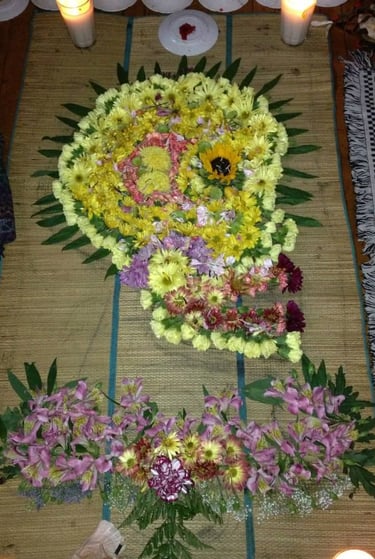
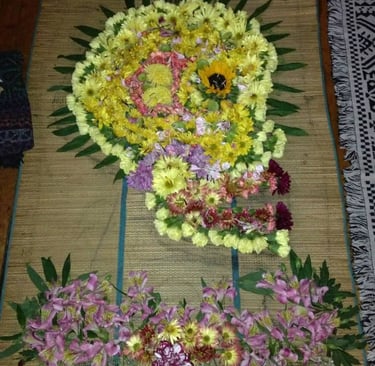
The praises have two parts. The first is a repeating verse sung by everyone present at the vigil; the other is a changing verse intoned only by the person to whom the praise was granted. It is considered that the songs produce specific vibrations which, when intoned in unison, raise the vibration of the place, and these vibrations are imprinted onto the flowers. Those who have gone to the altar to create the figure with flowers "smudge" (cleanse with smoke) each flower and place it in the figure, thus charging the flower with the energies of the copal and the songs of all present. Once the flower figure is finished, the midpoint of the vigil is reached. The participants of the layout share their "word," expressing their feelings about what they experienced during the first part of the ritual. Subsequently, they move to dinner. The Mayordomos of the dance offer generally traditional food to the participants
After dinner, perhaps around midnight, the shells are sounded to return to the oratory and continue with the second part of the ritual. "The words" (the leaders) share observations to impart ancestral knowledge, and later they choose two other participants to go to the altar to collect the flowers. The Regidor chooses the next participant whom they consider it is time to offer their praise. Through the songs, those chosen to "lift the layout" pick up the flowers one by one and tie them with a cord to wooden batons. The ritual is nearing its end when all flowers have been lifted and placed on the batons. The Regidor is the last to offer their praise, and this is coordinated with the end of the flower lifting. The next praise is intoned by one of the main "words," leading to a part of the ritual where the batons are carried so each participant can be impregnated with their energy. They are smelled, kissed, and rubbed on the face, at the will of each participant. Other people are chosen to pass around, after the batons, a plate with salt, one with water, and one with a special food that sat on the altar receiving the energy of the praises. After being impregnated with the energy of the baton, each participant takes a pinch of salt, puts it in their mouth, takes a sip of water, and takes a piece of the blessed food. Also, in most vigils, a small gift is given—an image of the patron saint adorned with ribbons—for the dancer to tie to their instrument or place as they see fit. This is a way of taking communion.
Next, it moves to "the word." First, those who lifted the flowers share their word. Subsequently, the word is given to those representing other groups or coming from other places. All persons with permanent hierarchical authorities also share their word. Afterward, any participant who wishes to express or share something is invited. Finally, the First Word shares an ancestral teaching; it is established how much time they will have to rest and at what time everyone must be awake to continue the next morning with the diurnal ritual: the ritual of the dance. In the most important vigils with many attendees, sometimes there is no time to rest, and they stay awake through the dawn.
Ritual of Dance
The shells sound around 8:00 AM to wake the dancers, who may have slept only a couple of hours. Everyone begins to dress in their special dance suits. For men, these consist of a maxtlatl (a loincloth) adorning the lower part of the body, and a Pectoral or a tilma (cape) covering the upper body. They also use a feather headdress, knee pads, elbow pads, wristbands, and—indispensably—the bells (ayoyotes), seed instruments placed on the ankles that produce sound when moving the feet. Women dress in a skirt, quechquémitl (a type of indigenous blouse), and all the other mentioned ornaments used by men. Again, the shells sound and the praises begin, inviting everyone to gather in the oratory. A short word is shared, then they proceed to breakfast. Before serving, they give thanks for the food and to the Mayordomos who prepared it with a praise. Again, they return to the oratory so everyone forms into two columns, headed by the First and Second Conchero. The dance of the salute begins—a simple dance invoking the four elements—and it continues with the dance of the march, which allows the columns to advance in procession to the site where the dance will be performed, normally in the atrium of the town church.
The Sergeants ensure the uniformity of the columns and that everyone intones the praises (if they are proceeding with them) or follows the march dance step harmoniously. Arriving at the dance site, the columns stop and a praise is intoned while the center of the dance circle is set up, where the drums, the incense burners, the plates with salt, water, and food, and any offerings are placed. This same praise serves to salute the patron saint and ask permission to proceed with the dance. Without breaking the columns, they divide—one advancing to the left and the other to the right, following the line of a circle around the central altar where the drums are. The columns cross each other to finally position themselves in a circle. The drums change the rhythm from the procession dance to the dance of the salute to the four elements. The Malinche positions herself in the center, tending the incense. The Regidor moves to the center and leads the salute dance, then chooses the first person to offer their dance.
The first dancer chosen—normally the one with the highest hierarchy or relevance (perhaps a dancer native to the location)—goes to the center, offers the salute dance, and then performs their dance. There is a repertoire of at least 30 dances from which each person freely chooses which they wish to offer if chosen to go to the center of the circle. All other dancers and the drums must follow their rhythm and dance variations. Before and after each dance, the dancer performs the "firma" (signature) or salute, which is a brief dance saluting the four elements. Upon finishing their salute, the dancer returns to their place in the circle where the Regidor will have remained, always following a clockwise flow. The Regidor, following this same direction, moves to the center to salute and continues choosing the next dancer.
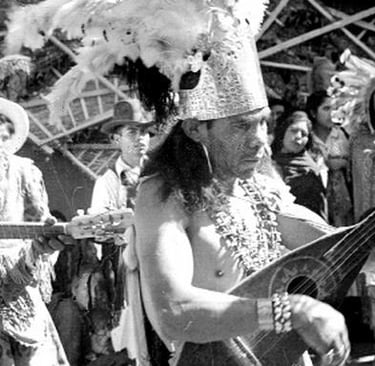
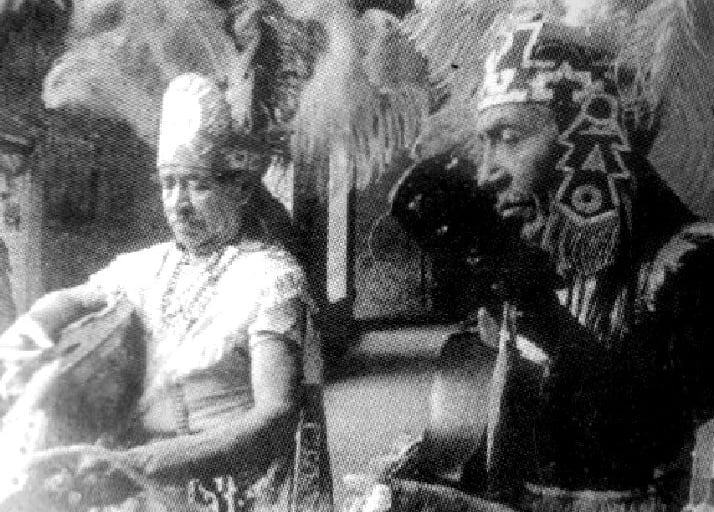
Ancient Conchero
Mexica Dancers in Coyoacán, Valley of Mexico
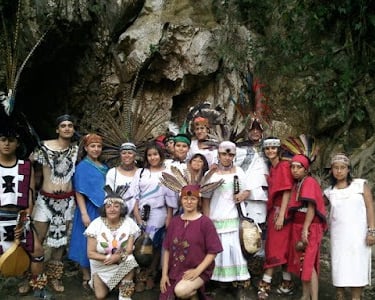
Recent dance of a Conquest Dance group in a cave in Zongolica, Veracruz
General Ernesto Ortiz Ramirez and General Faustino
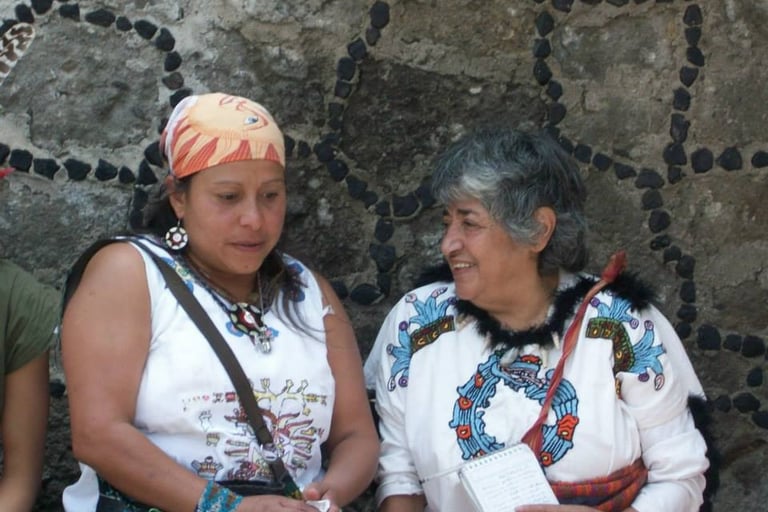
To the right, the Malinche of Sahumadoras of the Mesa del Santo Niño de Atocha, R.I.P. To the left, the current capitain of the group
Singing Praises in the Vigil
Flower Layout
Handing over an object during the Dance ritual
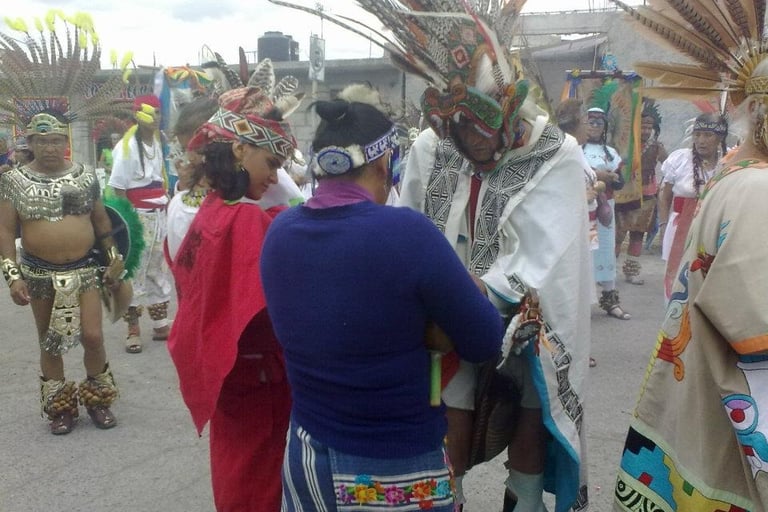
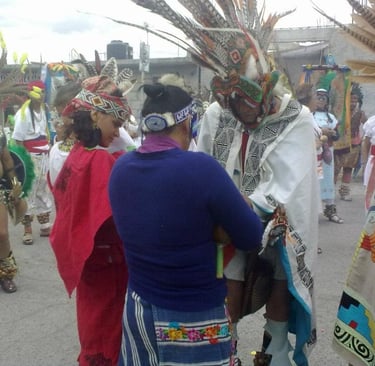
General Ernesto Ortiz’s group has distinguished itself by focusing on harmony and inclusion. This means the group leaders must direct the dance so that everyone—children and the elderly—can dance. This is why, at the beginning, they choose to dance only five dances before allowing a break. Other groups have what they call a much more "warrior" focus, where more dances are performed right away, which is physically much more demanding and prevents the elderly from participating.
After the break, the group gathers again to continue. A bit after midday, after having performed about 10–15 dances, the dancing concludes. The circle is organized back into columns and they march to the location where food will be offered. Often, before this, they enter the church to salute the saint, offering a couple of praises and prayers. Arriving at the place where the Mayordomos offer the food, a praise of gratitude is offered before eating. Afterward, they eat—in most cases, typical dishes of ancestral origin, such as barbacoa (lamb cooked underground with spices). Finishing the meal, another praise and even a small dance of thanks are offered, if space permits. The columns form again to head to the oratory. Arriving there, a couple more praises are sung to end with the circle of the word. All people assigned positions, such as the Sergeants and the Regidor, return them.
In the "word" (closing speeches), thanks are first given to the forces, elements, and deities present and invoked. Thanks are given to the hearts of the participants, to Mother Earth—called Tonantzin—and to the "Conquering Souls of the Four Winds," who are the deceased dancers.
Components and Meanings of the Dances
The dances are a way of bringing celestial and terrestrial wisdom to the earth—wisdom that is esoteric, geometric, astronomical, and mathematical—with steps and movements marked by the feet. The timings marked by the drum, the way they are divided, and the figures drawn with the feet create all kinds of fractals and mathematical sequences of deep meaning.
The Dance is also a way of raising prayers to the sky. It is prayer in motion; it is a way of offering, of taking communion with the divine, the essences, the elements, and the fellow dancers. It is also a form of moving meditation.
The dancers position themselves in a circle and face the center, which symbolizes the sun, the center of the earth, and where the drum, the incense burners, and the belongings of all the dancers are located.
The dances are composed—similar to the praises—in what is called "the plant and the flower." The "plant" is a step, a figure drawn with the feet that follows the timings marked by the drum and is repeated throughout the dance. The "flower" is a series of steps or a figure that changes after each plant. The dances can have up to thirteen flowers—thirteen different figures interspersed with the plant figure, which is always the same. The dancer who leads the dance chooses which flowers and how many they want to perform. In General Ernesto Ortiz's group, the number five predominates, which is the number of harmony. The dancers offer dances with only five flowers, which prevents the dances from being too long and provides more time for more people to offer their dance. Most dances begin with the plant, continue with the first flower and return to the plant, the first flower is repeated, they return to the plant and continue with the second flower, and so on.
All figures—whether the plant or the flower—are repeated; they are drawn to the left first, and then to the right. Some flowers are turns, and these are also always made first to the left and then to the right. Each step has a meaning: turns, for example, symbolize the wind element; crosses drawn with the feet symbolize the earth element; strikes with the feet on the ground symbolize fire; and steps forward and backward symbolize water. There are all kinds of different steps: squats, jumps, various turns, complex figures drawn with the feet, etc. The dances are physically very demanding and each can last up to 15 minutes.
There is a complex procedure for how the dance circle develops and how harmony is maintained. The circle must be balanced equally with men and women. If there is an equal number, they position themselves woman-man-woman-man. If there are more women, for example, it would be 2 women to 1 man. Thus, the masculine and feminine proportion is maintained. The Sergeants are responsible for organizing and overseeing this order. The goal is for the circle to be always symmetrical and harmonious—that no dancer is further out or further in, and the distance between dancers is equal. When there are many dancers and space is insufficient, two or more circles are created, one inside the other. The flow of dancers entering the center to lead their dance must follow the same direction when entering and leaving. Beginners must at least try to follow the direction of the dance or turn, even if they cannot yet mark the steps well. Each dancer must ensure that no one from the outside enters or crosses the circle, physically preventing the distracted intruder if necessary. If a dancer arrives late, they must wait outside the circle until the current dance ends. They will position themselves toward the East, which is the entrance; the Sahumadoras and Caracoles must come out to receive them and smudge them before they are permitted entry. Likewise, if a dancer must leave due to a force majeure, they must wait for the dance to end and ask permission from the sergeants.
Benefits of Practicing Aztec Dance
Aztec Dance is a holistic art that feeds the dancers physically, emotionally, mentally, and spiritually, as well as other humans, the locations where it is performed, Mother Earth, and the universe. It is a sacred discipline that, like no other, integrates benefits of all types—individual and collective—and masterfully represents the ancestral indigenous worldview, which divides nothing (such as science from spirit, human from earth, masculine from feminine, etc.). This is the essence of the dance: that which integrates everything, representing and reflecting the movement of creation in a ritual act. Below we detail several benefits separated into categories.
Physical Benefits
The dances are physically very demanding, both muscularly and cardiovaskularly, making it an excellent anaerobic exercise. Over time, the increase in muscle mass—especially in the legs—is quite noticeable.
In addition to being excellent cardiovascular exercise, the dance develops balance, coordination, and spatial orientation. Many movements in the Dance use special muscles we rarely utilize. These movements allow the opening and connection of energy points and lines in the body, such as the so-called "Chakras." One could see the dance as a discipline that joins the various benefits of other disciplines like yoga, tai-chi, and chi-kung.
Mental and Emotional Benefits
Firstly, there are the psychomotor benefits generated by physical movement. Like many other physical exercises, this practice releases substances in the body that improve mental and emotional well-being. Similarly, there are improvements in thought processing thanks to psychomotor development, especially due to the various figures and steps that go to both the left and right sides, helping to develop and improve the balance between the two sides of the brain and body.
On the other hand, there are the benefits generated from the communal life among dancers. The circle of the word creates an environment of openness and respect that allows for a more honest and sincere type of communication than what we are normally accustomed to. Over time, group members generate strong bonds of friendship and "compadrazgo" (godparent-like bonds), and the dance circle becomes a second family—often a family with whom we have greater freedom to express our feelings. This generates many mental, emotional, and social benefits.
Spiritual Benefits
Aztec Dance offers a powerful alternative for relating spiritually with the earth, the creative forces, the elements, and practically all living beings. It is a type of prayer and meditation in motion. It allows one to connect with, invoke, and evoke the elements and primordial forces existing on earth. It is a way of "caressing the earth with the feet." It is a type of offering. Sweat, fatigue, flowers, copal smoke, songs, and dances are offered. It is an act of connection and reciprocity with Mother Earth. The benefits of spiritual growth and strengthening are very noticeable—not just for the dancers, but for the places where they dance. The Dance is used as a means to ask for rain in places where it is scarce, always with positive results. The Dance is also a spiritual means to perform important life acts, such as marriages, baptisms, and the farewell of beings who have passed away.
It should be highlighted that there are currently many cultural and spiritual practices in Latin America, such as Catholicism, Buddhism, Hinduism, and Islam, as well as movement disciplines like yoga, tai-chi, capoeira, African dance, tango, etc. All these practices come from cultures much more distant—spatially and spiritually—from the cultures and worldviews existing within the territory of Abya Yala. Aztec Dance, on the contrary, is a cultural and spiritual discipline much closer to that of any Latin American people, making it far more complementary to them.